
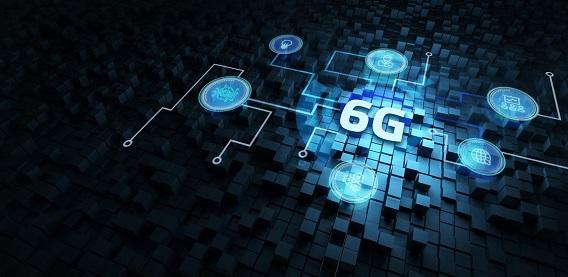
As the global technology community pivots its long-term vision towards the post-5G era, a thorough and objective 6G Market Analysis reveals a landscape of immense promise tempered by significant challenges. The primary strength of 6G lies in its core technical ambitions, which are set to redefine the very meaning of "instantaneous." The pursuit of terabit-per-second (Tbps) speeds, microsecond-level latency, and connection density exceeding 10 million devices per square kilometer represents a quantum leap over 5G. These capabilities will be the bedrock for a new wave of innovation, enabling real-time holographic interactions, the tactile internet, and pervasive artificial intelligence. Another key strength is the "AI-native" design philosophy, which promises to create self-optimizing, self-healing networks that can manage an unprecedented level of complexity with minimal human intervention. Furthermore, the planned integration of terrestrial and non-terrestrial networks (NTNs) will provide truly ubiquitous global coverage, eliminating the digital divide and connecting everything from remote industrial sites to aircraft in flight. These foundational strengths position 6G as a transformative force with the potential to catalyze unprecedented economic and societal change.
However, a sober analysis must also acknowledge the significant weaknesses and hurdles inherent in the path to 6G. The most formidable challenge is the fundamental physics of using terahertz (THz) spectrum. While these ultra-high frequencies can carry enormous amounts of data, they have extremely limited range and are easily blocked by obstacles like walls, foliage, and even atmospheric humidity. Overcoming these propagation issues will require a dense deployment of new hardware, including countless small cells and reconfigurable intelligent surfaces (RIS), leading to staggering infrastructure costs. The complexity of managing such a heterogeneous, multi-layered network is another major weakness, posing immense challenges for software development, orchestration, and cybersecurity. Furthermore, the energy consumption required to power this vast new infrastructure is a critical concern. While a key goal is to improve energy efficiency per bit, the sheer scale of the network could lead to an overall increase in energy demand, conflicting with global sustainability goals if not addressed with radical new technological solutions.
Despite these challenges, the opportunities presented by the 6G market are vast and compelling, extending far beyond simple communication. The opportunity to create entirely new industries is perhaps the most exciting prospect. The tactile internet could spawn a new market for remote services, from telesurgery to remote operation of heavy machinery. High-fidelity holographic communication could disrupt the travel, entertainment, and collaboration industries. The network's integrated sensing capabilities open up new business models for environmental monitoring, smart city management, and autonomous vehicle navigation. For incumbent telecommunication operators, 6G presents an opportunity to move beyond being connectivity providers and become orchestrators of complex digital ecosystems, offering value-added services in computation, sensing, and AI. For new entrants, particularly from the software and cloud sectors, 6G offers a chance to disrupt the traditional telecom model and capture a significant share of the emerging digital services market. The potential to unlock trillions of dollars in economic value by 2040 makes these opportunities a powerful magnet for investment and innovation.
Finally, no analysis is complete without considering the threats that could derail or fragment the 6G market. Geopolitical tensions are arguably the greatest threat. The race for 6G supremacy between nations, particularly the US and China, could lead to a "splinternet" scenario with competing, non-interoperable standards. This would fragment the global market, stifle innovation, and increase costs for everyone. The immense security challenges posed by a network that is deeply integrated with critical infrastructure, autonomous systems, and personal data cannot be overstated. A single, large-scale breach could have catastrophic consequences, eroding public trust and leading to restrictive regulations. The threat of a growing "digital divide" is also real; if the enormous cost of 6G deployment means it is only available in affluent urban centers, it could exacerbate existing social and economic inequalities. Successfully navigating these threats through international cooperation, robust security-by-design principles, and equitable deployment strategies will be just as important as solving the technical challenges.
Explore More Like This in Our Reports:
Manufacturing Analytics Market
Video Content Analytics Market

 English
 Arabic
 French
 Spanish
 Portuguese
 Deutsch
 Turkish
 Dutch
Dutch
 Russian
 Romaian
 Portuguese (Brazil)
 Tiếng Việt